

 NAVER Booking
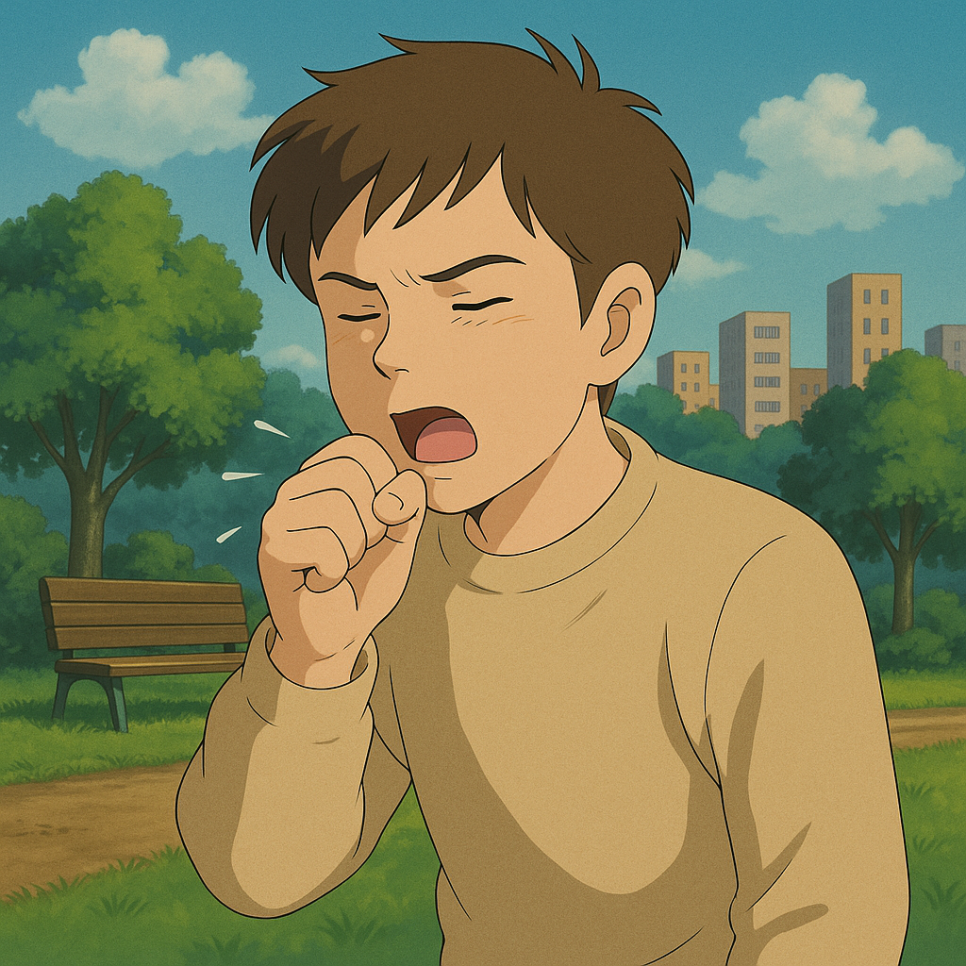
"Cough, cough..." There is nothing quite as distressing as a cough that seems about to end, yet never does. Especially if a cough that started after a cold or the flu continues for weeks or months, even daily life
tends to become difficult. Even after having tests on their lungs or bronchi at a hospital, many people feel frustrated without a clear solution after only hearing, "There is no particular abnormality, but it is just because the bronchial tubes have become sensitive."
However, did you know that this kind of chronic cough could perhaps be connected to problems in other parts of our body, particularly the large intestine or bladder? Today, through a case where a patient whose large intestine and bladder functions were usually weak overcame a chronic cough that started after a cold through Korean medicine treatment, we will examine that hidden link. Perhaps there might be a way to escape from that persistent cough more easily than you think.
Cough Lasting Over two months Starting After a Cold, Along with Discomfort in the Large Intestine and Bladder
Not long ago, 000 (pseudonym) visited our clinic due to a cough that had continued for several months. About 2-3 months ago, right after traveling to a hot region, they caught a cold when the weather suddenly turned cold. The cold symptoms improved in a few days after taking medicine, but the cough had continued from then until now.
"At first it was just a light hacking cough, but now once it starts, I cough continuously in bursts, and starting from a month ago, phlegm has also been rattling. I went to both ENT and internal medicine clinics and had X-rays taken, but they only said there was no abnormality… The doctors said that because the bronchial tubes have become sensitive it could last a long time, but there was no clear-cut method."
The patient mentioned having a memory of coughing for a long time whenever catching a cold in childhood because their bronchial tubes were weak. When recently contracting COVID, there were no particular aftereffects, but this cough was different. The cough came out frequently regardless of day or night, and coughing burst out if talking for a long time or moving even a little.
During consultation, when asked if there was any other usual discomfort, 000 mentioned recently experiencing bowel and urination problems as well.
"Actually, things are a bit bad on the stool side as well. In the past I had a tendency toward constipation, but recently I go to the bathroom several times a day, and the stool has also become loose. There are also times when it is hard to hold urine if the urge suddenly comes. I think these symptoms have been present slightly longer than the cough."
Korean Medicine Diagnosis: The Deep Relationship Between the Lung (肺) and Large Intestine (大腸)·Bladder (膀胱)
While Western medicine paid attention only to the lungs and bronchial tubes, Korean medicine views our body as an organic relationship. In particular, the lung performs its functions while closely connected to other internal organs, among which representative ones are precisely the large intestine and bladder.
- Lung (肺) - Large Intestine (大腸): Exterior-Interior (臟腑表裏) Relationship
The lung and large intestine have an 'exterior-interior (表裏)' relationship in Korean medicine, which is a relationship of being paired with each other. If the lung governs qi through respiration and disperses it throughout the body, the large intestine takes charge of the final digestion and excretion of food, and is also involved in body fluid (津液) metabolism. If the function of the large intestine is not smooth, that impact reaches the paired lung and causes a decline in lung function, which can appear as symptoms such as coughing or phlegm.
- Lung (肺) - Bladder (膀胱): Visceral Intercommunication (臟腑相通) Relationship
The lungs play an important role in governing fluid metabolism in our body. Known as 'the lung governs the regulation of waterways (肺主通調水道),' the lungs help send fluids downward so that the urinary bladder can excrete them through urine. If a problem occurs in the bladder's qi-transformation function (the function of storing and discharging), fluid metabolism does not run smoothly, and this in turn can burden lung function, generating phlegm (痰) and inducing coughing.
In the case of 000, with the functions of the large intestine and bladder already weakened, an external factor—a cold—attacked the lungs, and the entire weakened lung-large intestine-bladder system was shaken, which could be seen as the reason the cough became chronic. In other words, because the body's 'foundation' had been weakened, the aftereffects of the cold did not heal easily. In addition, it was judged that the prolonged period of stress mentioned by the patient also served as a factor deepening this bodily imbalance.
Treatment Process: Strengthening the Body's Foundation and Improving Lung, Large Intestine, and Bladder Functions Together
Rather than simply suppressing cough symptoms, the treatment goal was set on correcting the imbalance of the internal organs that served as the root cause of the problem.
-
Acupuncture Treatment: Acupuncture treatment was administered 2 times a week, focusing on dredging the qi of the lung (肺), large intestine (大腸), and bladder (膀胱) meridians and restoring the functions of the related internal organs.
-
Herbal Medicine Treatment: A 15-day supply of herbal medicine was prescribed to strengthen lung function, improve large intestine and bladder functions, and restore the overall balance of the body.
Treatment Results: Cough Improved by 90% in 2 Weeks, Large Intestine and Bladder Symptoms Also Improved
After 2 weeks of treatment, 000's cough improved by more than 90%. They reported feeling comfortable enough to hardly cough anymore. In addition, the discomforts related to the large intestine and bladder that they had worried about, such as frequent bowel movements and urinary urgency, were also noticeably improving together.
Currently, to wrap up remaining aspects and make the body's foundation even more solid, an additional 15-day supply of herbal medicine is being taken while monitoring progress.
Conclusion: Chronic Illness, Looking at the 'Foundations' Beyond Symptoms
This case of 000 well illustrates how important it is to examine the balance and foundation of the whole body rather than merely focusing on manifesting symptoms when treating a disease such as chronic cough.
Clues to the problem, which were hard to see when looking only at the lungs and bronchial tubes from a Western medical perspective, finally became clear when considering the lung-large intestine-bladder relationship through Korean medicine, as well as the patient's overall bodily condition and daily stress. And through this integrative approach, by strengthening the body's weak links and restoring function, the chronic cough that had troubled the patient for several months could be treated effectively.
Could you be suffering right now from a chronic cough of unknown cause? If there is no improvement despite various treatments, we recommend examining whether there are hidden imbalances in your body and what the more fundamental cause might be through Korean medical care. Perhaps the key to the solution may be closer than you think.