
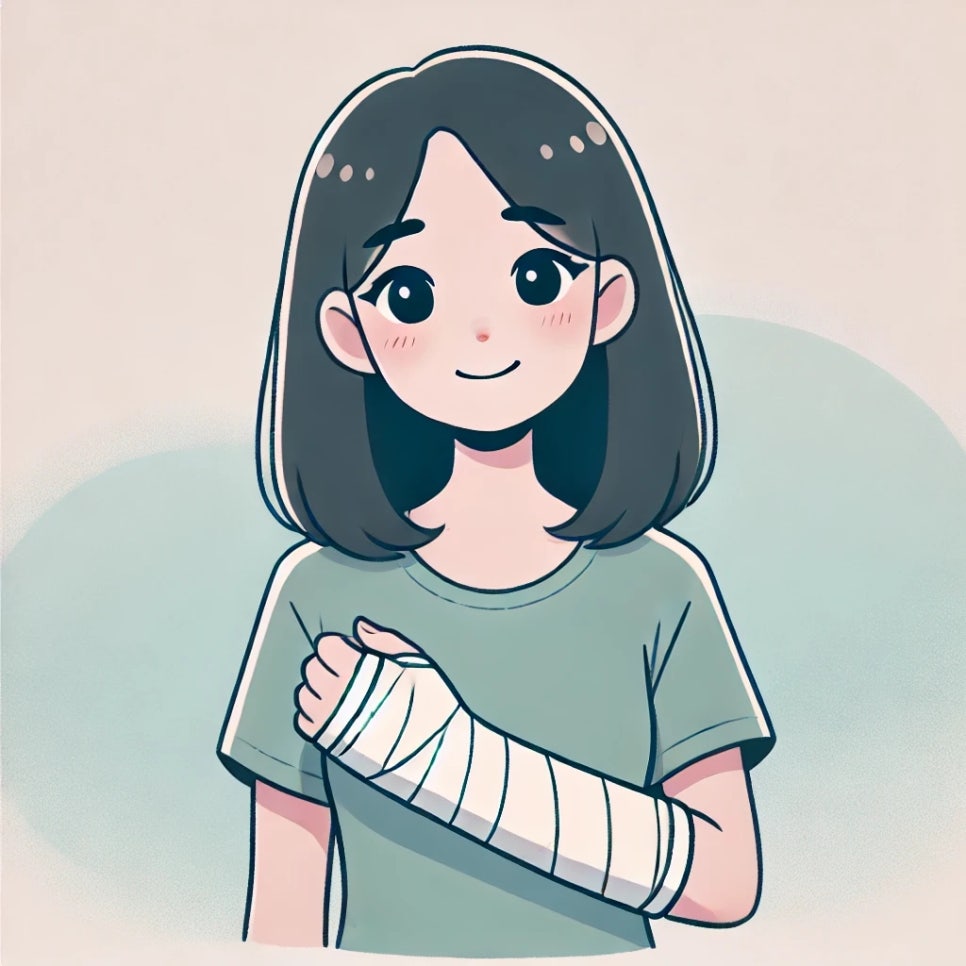
“I took off the cast… why does my wrist hurt more?”
“A few weeks ago, I fell and broke my wrist, so I had a cast put on.
At the orthopedics clinic, they said ‘the bone has knitted well now’ and removed the cast,
but the problem is that even after that, my wrist throbs and continually feels unstable.
- Even when opening a door or holding a cup, there is a ‘sharp twinge’,
- Even if I twist my hand just a little, it aches with an aching weakness so I cannot exert force,
- Even after receiving physical therapy and electrical therapy for more than 1 month, there is no major change, so
- Worries kept piling up, wondering ‘About when will I be able to use it like before…?’
People around me say things like “Just try rehabilitation exercises” or “It will be fine if you take more painkillers,”
but why on earth is it not getting better like this?”
“Pain after cast removal is common, but when you actually experience it, it is frustrating.”
- Weakened muscles and ligaments
- Because the wrist could hardly be used during the immobilization period,
- The muscles and ligaments around the joint are in a state of having lost a lot of supportive strength.
2. Stiffened joint
- Since it was immobilized tightly for over a month with a cast,
- Blood circulation is not smooth either, and the range of motion of the joint is reduced, causing pain every time it moves.
3. Thermal and physical therapy alone are insufficient
- Hot packs and electrical stimulation therapy help with pain relief,
- but there are limits in directly reinforcing weakened ligaments or establishing accurate joint alignment.
“Can a Korean medicine clinic strengthen ligaments without injections or surgery?”
From a Korean medicine perspective, recovery after a wrist fracture is viewed as requiring both
- the process of ‘restoring strength again’ to the weakened muscles and ligaments, and
- the process of helping improve blood flow by loosening stiffened meridians (the flow of blood and qi) to take place together.
- Acupuncture treatment: Relieves tension in the muscle meridians (muscles and meridians) surrounding the painful area,
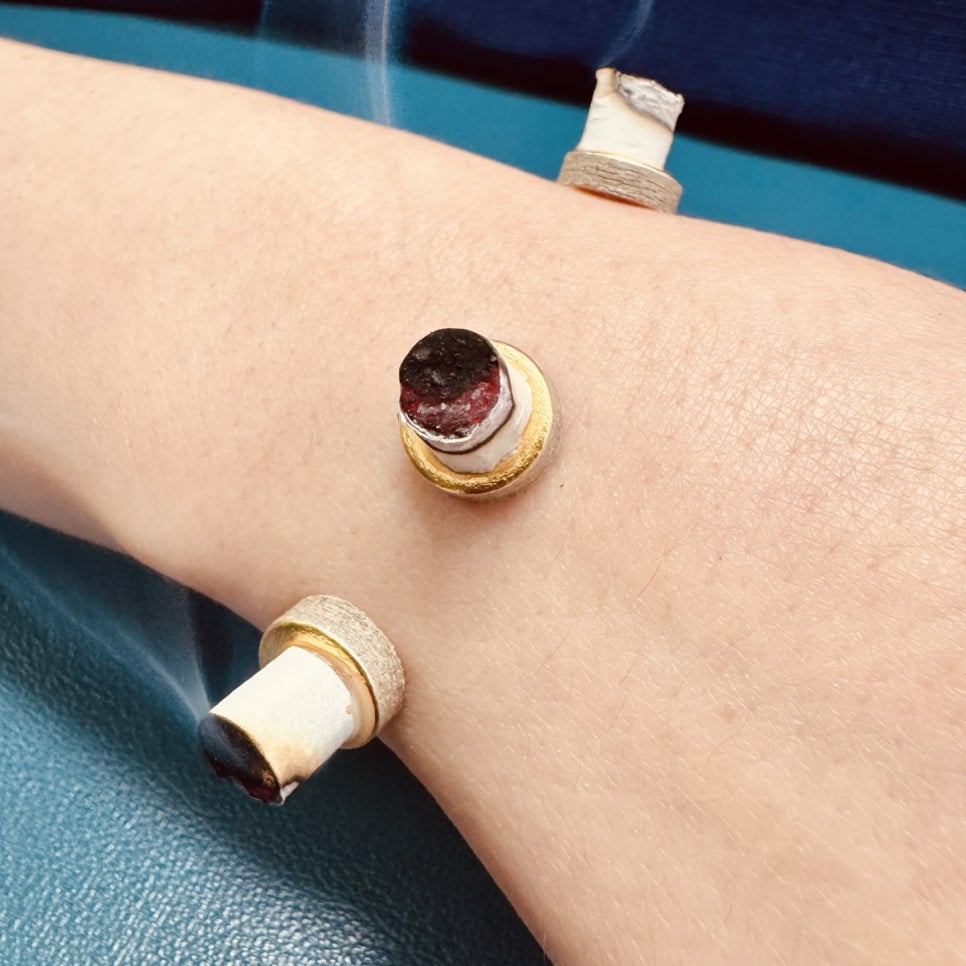
- Moxibustion treatment: Can increase the blood flow and nutrient supply necessary for ligament and tendon regeneration through localized warming effects,
- Chuna (manual therapy): Gently corrects imbalances in the wrist joint, securing stability during daily movements,
- When necessary, supplementation to enhance stamina and tissue regenerative capacity is also possible through herbal medicine prescriptions.
If ‘structure + flow of qi and blood + whole-body supplementation’ are addressed together in this manner,
it means that the “feeling of the wrist being shaky” decreases, and you become able to grasp even light objects firmly.
“Unable to even carry out daily life properly… even my mind was growing exhausted.”
Things that were not a problem at all before the fracture,
- Even minor movements such as turning a doorknob, holding a toothbrushing cup, and washing dishes,
- Repeatedly shrinking back at thoughts like ‘It hurts, I can’t apply force’…
When this repeats, one becomes mentally daunted as well,
and stress accumulates, wondering,
‘Why isn’t it healing even though I have been in treatment for over a month…’
At times, there are cases where pain resolves faster only after finding psychological stability first.
Therefore, at a Korean medicine clinic, lifestyle habits or stress factors are sometimes also looked at together through consultation.
“Wrist pain, do not leave it unattended any longer.”
- If pain continues for more than 2 to 4 weeks even after removing the cast,
- Simple heat therapy and physical therapy alone may not be enough.
- It is a time when customized rehabilitation treatment is needed to help the ligaments perform their role properly again.
When combined with Korean medicine approaches (moxibustion, acupuncture, Chuna manual therapy, etc.),
- Pain relief + ligament strengthening + joint stability
- You can address these three things together.
Be sure to check if this sounds like you!
- "I took off the cast, but my wrist aches even with a little use."
- Possibility that joint stability is significantly reduced due to weakened muscles and ligaments
2. "There is little improvement even after prolonged physical therapy and painkiller use."
- Need for treatment that directly targets the cause (reinforcing ligaments/soft tissue, improving meridian circulation)
3. "What if I end up needing reoperation..."
- Before resorting to surgery unconditionally, it is worth sufficiently trying conservative methods (acupuncture, moxibustion, etc.)
Conclusion: "If you want to use your wrist comfortably now..."
Before the fracture, you probably never imagined that 'using your wrist,' which was taken for granted, would become this uncomfortable.
However, if you receive proper rehabilitation treatment and strengthen the weakened ligaments,
can recover your daily life much more easily.
If you are worried, thinking, "The pain persists for a long time even after removing the cast, why on earth isn't it healing?",
- Prior to injections or surgery,
- Try pursuing both ligament recovery and pain relief through Korean medicine treatment (acupuncture, moxibustion, Chuna manual therapy).
"A life where your heart also feels heavy whenever your wrist hurts,
you can break free from it before it's too late."