
"They Said Even the X-ray Was Normal, So Why Does My Knee Keep Hurting?"
Hearing from a hospital examination that it is not degenerative arthritis and that there is no cartilage damage brings relief, but at the same time, it is frustrating. It clearly hurts, so being told there is "nothing particularly wrong" leaves you confused about what on earth is causing the pain.
In fact, knee pain often appears connected to hidden problems throughout our entire body. Just as a slight misalignment of a car's wheels can cause the vehicle frame to vibrate and make noise, when various factors in our body—such as posture, muscles, blood circulation, and stress—become subtly misaligned, pain can occur even if tests appear perfectly fine.
In this article, we will examine the hidden causes of knee pain one by one, which even specialists can easily overlook.
1. Knee Joint Malalignment – An Invisible Load Imbalance
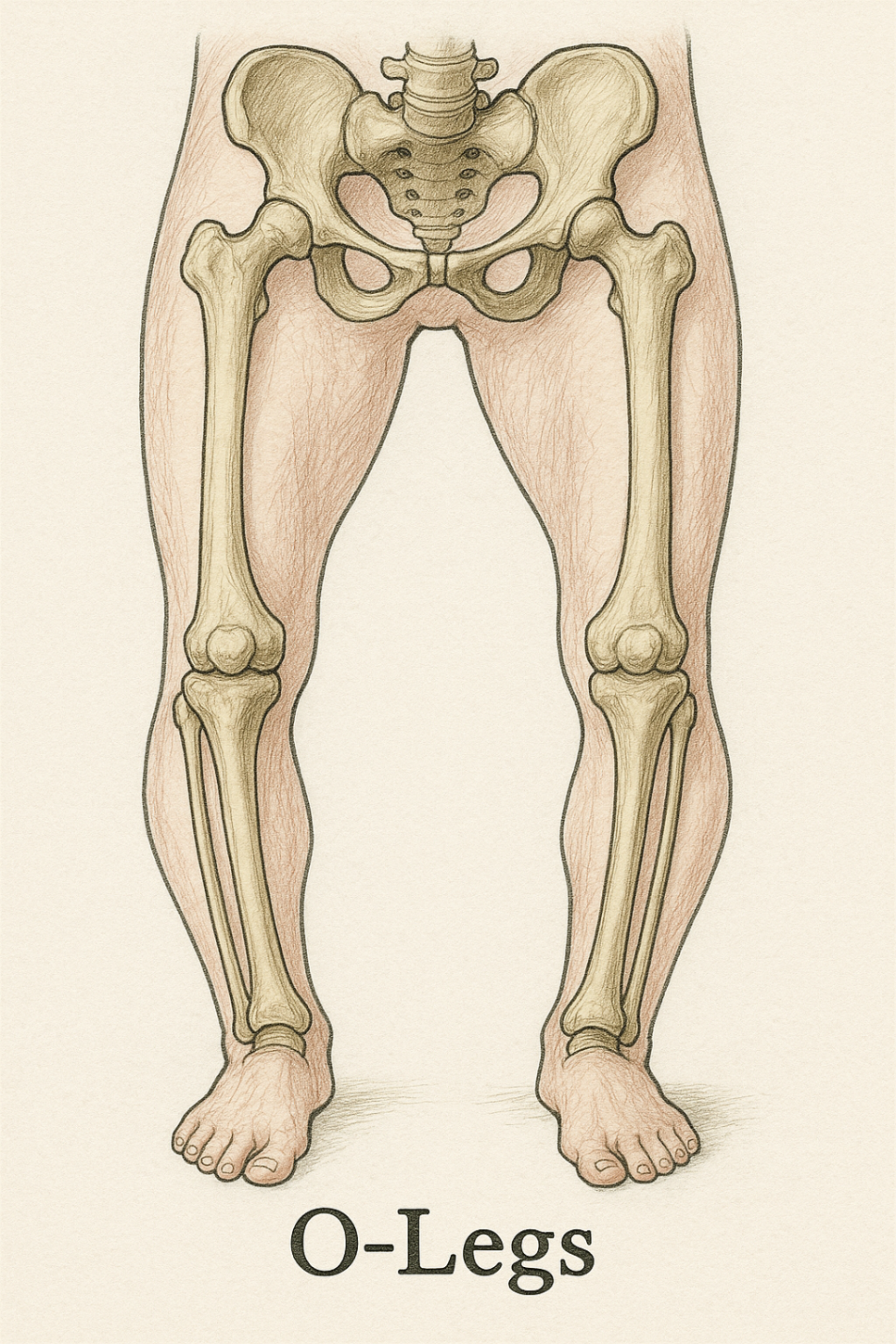
Even if your legs appear straight from the outside, subtle malalignment of the knee joint can lead to pain.
For example, when the knees deviate from their normal axis, such as in bowlegs or knock-knees, excessive pressure is placed on one side of the joint. At first, you may not notice any major problem, but walking or running for a long time in this condition can accumulate microtrauma to the cartilage and ligaments, potentially leading to pain.
In automotive terms, it is similar to a situation where a slight wheel misalignment wears down only one side of a tire. Even if it looks completely fine on the outside in the early stages, the unevenly shifted load ultimately causes wear and pain.
Structural Abnormalities of the Foot
When there is no arch on the sole, as with flat feet, shock is not properly dispersed, and some of the force is transferred to the knee. People with flat feet can easily develop pain on the inside of the knee even without walking for long periods, which is because the knee directly absorbs the impact that the foot failed to absorb.
Pelvic Imbalance
Because the ankle-knee-hip joint is a single column connected along a straight line, misalignment of the foot or an imbalance in the pelvis can also affect the alignment of the knee joint in a chain reaction.
For instance, if the pelvis tilts to one side, it becomes as though the leg lengths have changed, which can lead to more body weight being placed on one knee. This kind of body imbalance is difficult to discover through X-rays, but it often serves as a decisive clue to pain.
Case: Person A, an office worker in their 30s, frequently felt right knee pain after working while sitting for long periods. Although there were no issues on the medical examination, it turned out that due to postural habits, the pelvis was misaligned and more weight was being placed on the right leg. There had always been a habit of standing with weight placed on one leg.
Knee Alignment Checkpoints
-
Bowlegs / Knock-knees: Leg malalignment overloads the cartilage on one side of the joint, causing pain
-
Foot structure such as flat feet: Collapse of the foot arch transfers impact to the knee, causing chain-reaction pain extending from the knee to the hips
-
Pelvic tilt: Habits such as bearing weight on one leg or crossing legs misalign the pelvis, causing a load imbalance between both knees
-
Muscle imbalance: Imbalances between the front and back thigh muscles are also linked to knee alignment, pulling the patella (kneecap) to one side and causing pain
2. Lymphatic and Venous Circulatory Impairment – "Water on the Knee" Without Swelling?
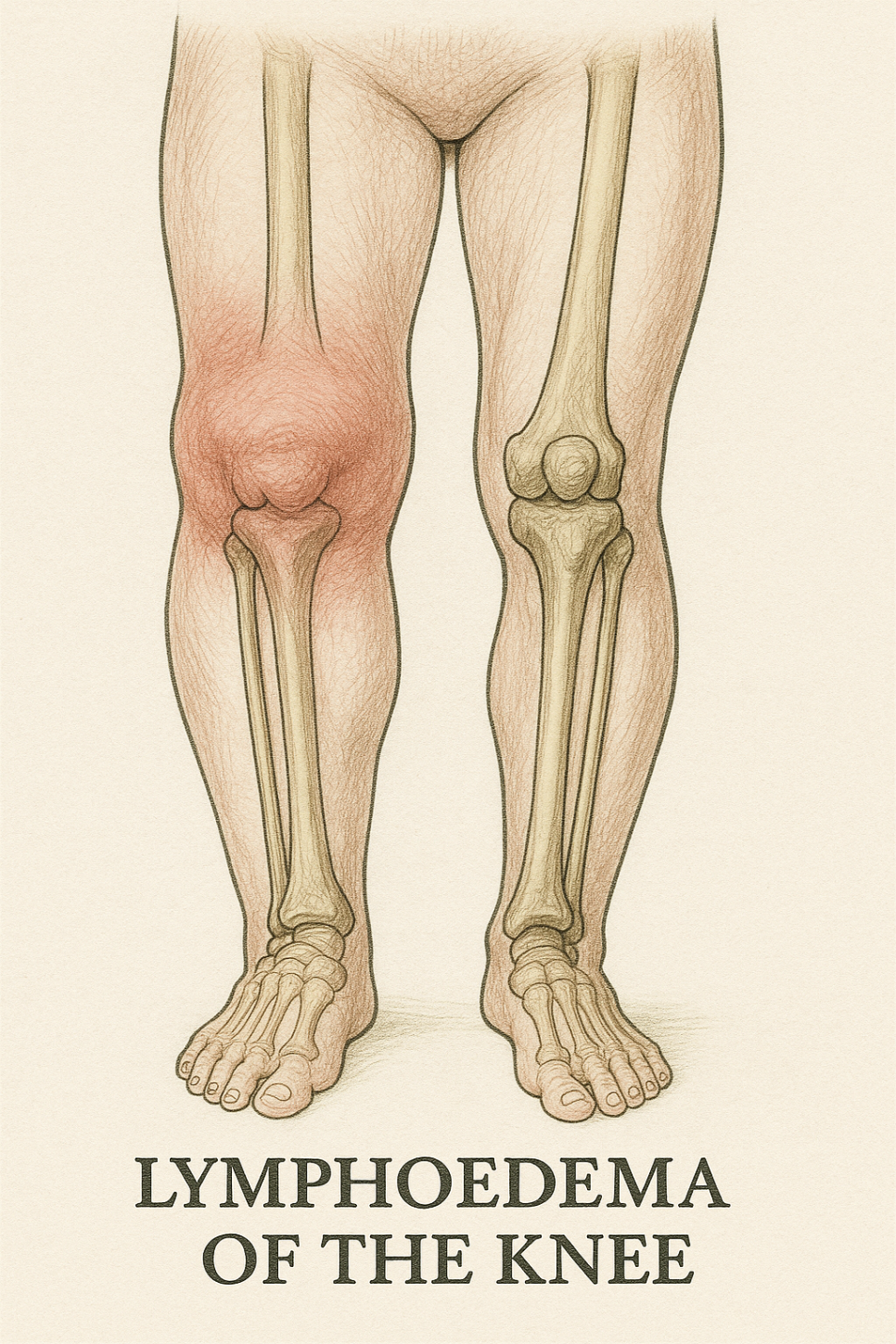
You have probably heard the phrase "water on the knee," right? This refers to cases where joint fluid accumulates due to trauma or inflammation, but even if the knee does not appear severely swollen on the outside, subtle fluid circulation disorders can still cause pain.
This is an aspect that those whose legs frequently swell and go numb should pay attention to. When tissue fluid mixed with waste products, which our body's veins and lymphatic vessels ought to circulate smoothly, stagnates around the knee joint, it can cause a kind of micro-edema and inflammatory response, triggering pain.
For example, when there is chronic venous insufficiency, blood pools in the veins of the legs and inflammatory substances stagnate. In one study, there was a finding that about 73% of knee osteoarthritis patients had accompanying lower-extremity venous disease, a figure much higher than that in people without venous circulation disorders (about 58%).
This suggests that decreased blood circulation in the legs may be linked to knee pain. When blood does not circulate well:
- Tissues swell and inflammation occurs, worsening joint pain
- When blood pools, the supply of oxygen and nutrients to surrounding tissues also becomes insufficient, hindering recovery
Lymphatic circulation is similar. Lymph acts as a drainage channel that collects waste products, and when lymphatic flow is blocked, edema and inflammation remain around the joint.
In particular, if you sit and work for long periods, or have a constitution where the body swells easily due to weak heart or kidney function, residual edema may always be present in the soft tissues around the knees. In a damp environment, inflammation spreads easily even with small stimuli, so the pain threshold inevitably lowers.
3. Ankle and Achilles Tendon Abnormalities – Problems Starting from the Toes Making the Knee Hurt
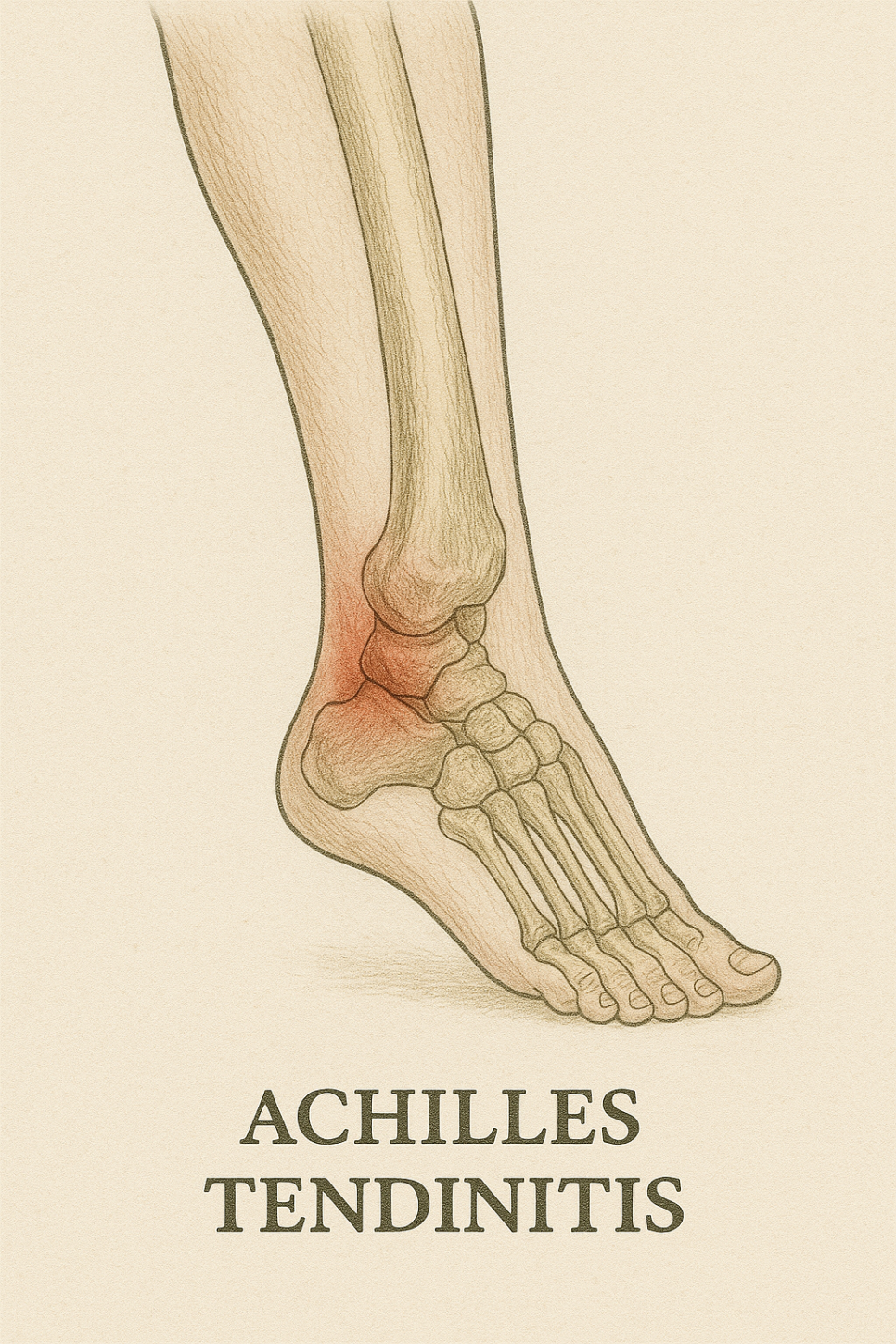
There are also many cases where the cause is hidden below the knee. In particular, the Achilles tendon and the ankle may seem like areas separate from the knee, but they are connected in a chain.
The Achilles tendon is the largest and toughest tendon connecting the calf muscles to the heel; when the condition of this tendon is poor, ankle movement is restricted and gait becomes altered. Then, knee movement naturally becomes distorted as well, and the burden increases.
For example, if you limp due to an Achilles tendon injury, the body adopts an abnormal gait to avoid pain. When the walking pattern changes, such as walking on the balls of the feet instead of stepping properly on the heel, the normal ankle motion that absorbs shock decreases, and that impact is transferred directly to the knee.
In addition, two large muscles of our body (calf muscles) are attached to the Achilles tendon, and among these, the muscle called the gastrocnemius extends above the knee and also serves to bend the knee. In other words, the Achilles tendon, calf, and knee can be seen anatomically as a single unit.
When the calves are tight and the Achilles tendon is stiff, the knees do not bend well, and because shock absorption during walking does not occur, pain inevitably arises.
Ankle Instability
Foot instability also affects the knees. People whose ankles frequently sprain unconsciously contract their knee movements and adopt an abnormal gait.
Even with an unstable foot structure, such as flat feet or pes cavus (high arches), the shock absorption pattern during walking is disrupted, causing micro-impacts to accumulate on the knee cartilage.
Therefore, if your knee hurts while your ankle is also stiff or your calf is always tight, an approach that loosens the area around the ankle first, such as Achilles tendon stretching or calf massage, is necessary.
4. Thigh Muscle Weakness and Pelvic Problems – When the Muscular Core Supporting the Knee Is Shaken
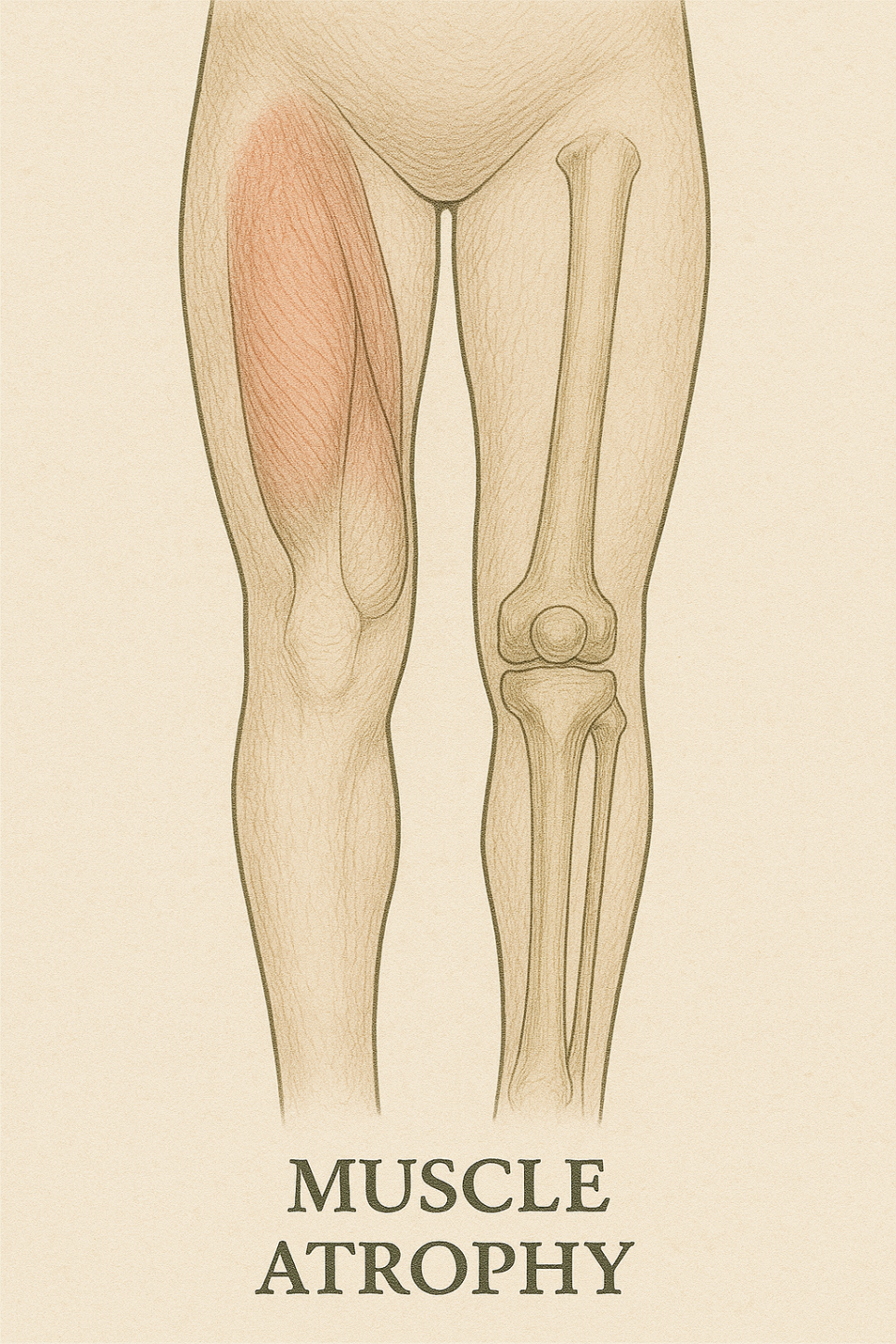
The condition of the muscles that envelop and move the knee joint has a decisive impact on pain. It is common to hear the advice to "strengthen the muscles around the knee," and behind this lies the fact that the thigh muscles (quadriceps) are the core of knee stability.
The quadriceps in front of the thigh serve to extend the knee, while firmly supporting the kneecap and the joint like four pillars that fasten the knee joint. When these muscles weaken, the knee joint becomes loose and prone to improper movement, leading to pain even with minor activities.
In fact, in individuals with weak thigh muscle strength, the muscles cannot absorb the shock applied to the knee, leaving the joint cartilage to bear the overload entirely.
Conversely, when the thigh muscles are firm, the muscles act as a cushion even when going up and down stairs, reducing direct impact to the cartilage and thereby greatly helping to prevent pain.
Thigh Muscle Imbalance
Looking at the causes of anterior knee pain (patellofemoral pain syndrome) even in younger demographics, balance issues between the front thigh muscles and back thigh muscles (hamstrings), decreased flexibility, and similar factors are mainly pointed out.
In other words, an imbalance in muscular force can pull the patella to one side, potentially triggering pain.
Postpartum Muscle Weakening
In the case of women, there are many instances of complaining of knee pain before and after childbirth as the muscle strength around the pelvis and thighs weakens.
The hormone relaxin, secreted during pregnancy, loosens joint ligaments, and even after childbirth, the state of weakened muscles around the pelvis and spine continues for a while.
During this time, as the muscles that had supported the knees fail to perform their proper role, it is common for the knees to make clicking sounds and ache when descending stairs or standing up while holding a child.
5. Stress and Systemic Inflammation – The Sparks of the Mind Enlarge Joint Inflammation
Modern individuals often experience physical symptoms arising not only from physical problems, but also from stress and mental tension. Knee pain is no exception.
To the extent that some people say, "My knees ache more when suffering through a busy schedule," stress and joint pain are closely related. Why would this be?
Chronic stress causes changes in our body's immune and endocrine systems, increasing systemic inflammatory responses.
For example, under conditions of excessive stress, stress hormones such as cortisol are secreted; although they suppress inflammation temporarily, in the long term, our body can lose hormone sensitivity, and the immune system can be disrupted, potentially altering the constitution so that chronic inflammation occurs more easily.
In addition, muscle tension during stress also plays a role. Under stressful circumstances, the body unconsciously tightens, causing muscles to contract stiffly; muscles that are constantly tensed in this way suffer from poor blood flow and accumulate waste products such as lactic acid, releasing pain-inducing substances.
Case: Office worker Mr. B, in his 50s, had usually suffered from knee osteoarthritis but managed it steadily and got along without major problems. However, after experiencing extreme stress recently due to conflicts and overwork at the workplace, both knees suddenly swelled severely, and the pain worsened to the point where he could not walk. At the hospital, he was diagnosed with acute rheumatoid arthritis; as it turned out, Mr. B originally had a latent predisposition to rheumatism, and recent stress served as a trigger, leading to the manifestation of the disease.
6. Other Hidden Causes – Easily Missed Systemic Links
In addition to what has been covered previously, there are many causes that trigger knee pain even if they do not show up well on examinations. Our bodies are connected more intricately than we might think, so answers are sometimes found in unexpected places. The following are additional causes worth examining.
Referred Pain from Adjacent Joints
Even when the knee itself is completely fine, there are cases where hip joint problems are felt as knee pain. In particular, hip osteoarthritis commonly triggers radiating pain that reaches down to the knee, not just groin pain.
Conversely, nerve compression resulting from a lumbar herniated disc or spinal stenosis can also cause pain or numbness around the knee. In such cases, treating the knee will not lead to improvement; resolution requires treating the lower back or hip joint.
Myofascial Pain and Postural Patterns
Patterns of tension in the tissue known as fascia, which surrounds the entire body, also affect knee pain. For example, when the fascial band on the outer thigh (the iliotibial band) becomes tight, pain develops on the outside of the knee (commonly known as runner's knee).
If the fascia on the sole of the foot is stiff, it connects through the calf, back of the thigh, and lower back fascia, which may trigger knee and lower back pain.
Body Weight and Dietary Habits
Needless to say, being overweight or obese places a heavy burden on the knees. It is known that with every 1kg increase in body weight, an additional load of 3 to 5kg is placed on the knee joint.
Therefore, even minor cartilage damage can be felt as major pain by an obese person.
In addition, stimulating dietary habits (salty food, alcohol, etc.) increase inflammation in the body and trigger edema due to excess sodium, adversely affecting the joints. Conversely, an anti-inflammatory diet (vegetables, blue-backed fish, and other foods rich in omega-3) may provide supportive help in relieving pain.
Hormonal Changes
Hormonal changes also affect joint pain. Some women experience aching or swelling in their joints around menstruation, which is due to fluid retention (swelling) and changes in pain sensitivity caused by progesterone fluctuations.
During periods of rapid hormonal shifts, such as pregnancy, childbirth, or menopause, joint pain can also worsen. In particular, when estrogen decreases due to menopause, the protective effect on bones and cartilage diminishes, making the joints weaker and prone to pain.
Climate and Environment
Many people know from experience that the weather influences joint pain. There are scientific hypotheses as well, such as the theory that when atmospheric pressure drops, the relative pressure inside the joint rises and causes pain to be felt, or the theory that blood flow around the joints decreases in the cold, causing stiffness.
Conclusion: The Puzzle of Pain, Looking at the Full Picture
Knee pain does not necessarily mean an issue with the knee itself alone. As we have seen this time, the whole body—from the alignment of the legs to the tips of the toes, muscles, blood vessels, hormones, and stress—is organically connected and can affect the knee.
Just because nothing abnormal was found in an examination, never dismiss it by thinking, "I guess it's just because I am being sensitive." Pain is fundamentally a signal sent by the body. It is simply that the wiring of that signal light may be connected from afar.
Therefore, when your knee hurts, it is important to broaden your view slightly and examine your overall bodily condition.
-
Do I have flat feet?
-
How is my walking gait?
-
Have I been under a lot of stress recently?
-
Have I gained a lot of weight?
-
Is my thigh muscle strength sufficient?
As you answer these questions one by one, the puzzle pieces of pain can fall into place.
The most important thing is for patients themselves to understand and care for their own bodies. Participating in deducing why your knee hurts and gradually correcting lifestyle habits from the ground up is the path toward fundamental healing.
"Shall I use some muscles I haven't been using regularly? Shall I try stretching? Shall I adjust my diet?" These small actions will come together to build a strong tomorrow for your knee joints.