
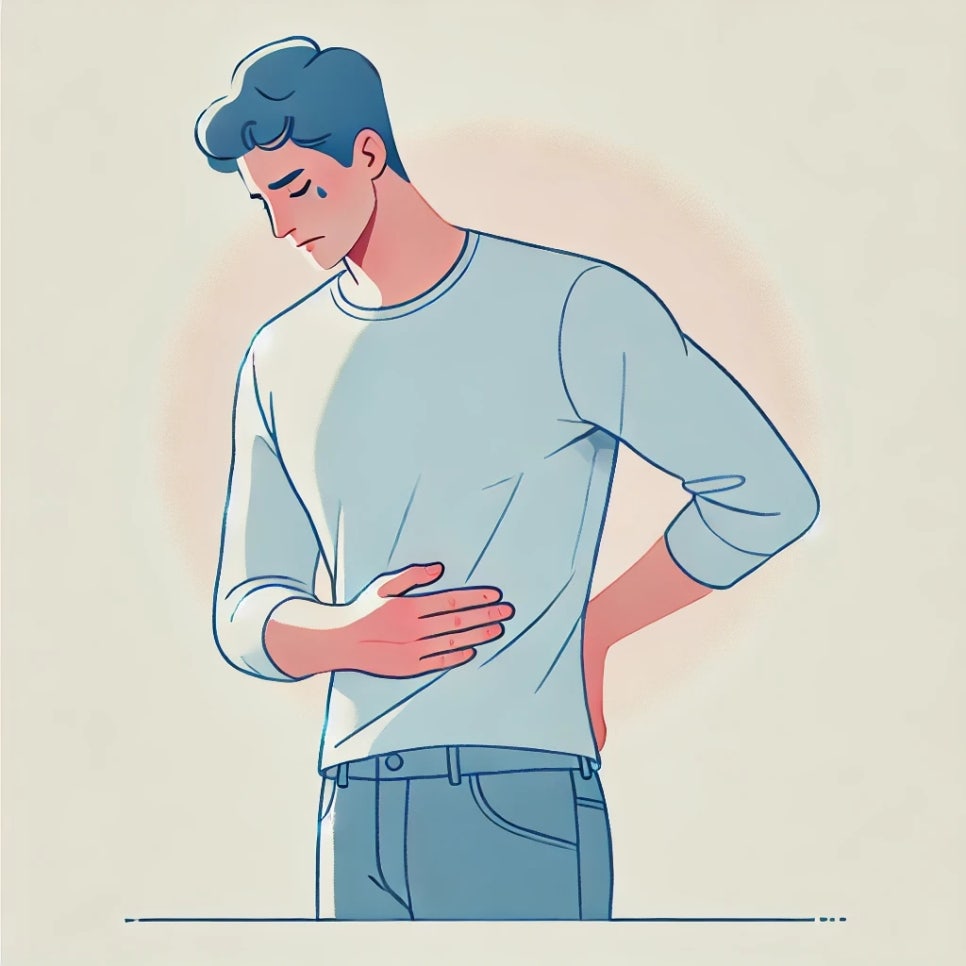
“If your back hurts often, start by checking your bowel movements and digestive condition!”
For those who frequently feel back pain,
have you ever thought about whether your digestion is fine?
- Whether your stools are usually loose,
- Whether you have constipation,
- Or whether your indigestion is subtly significant…
When our back hurts, we usually think of muscle problems or disc herniation first,
but if tests reveal no particular spinal abnormality yet the pain persists,
you might want to consider whether discomfort in the intestines (large and small intestines) or pelvic area could be causing the back pain.
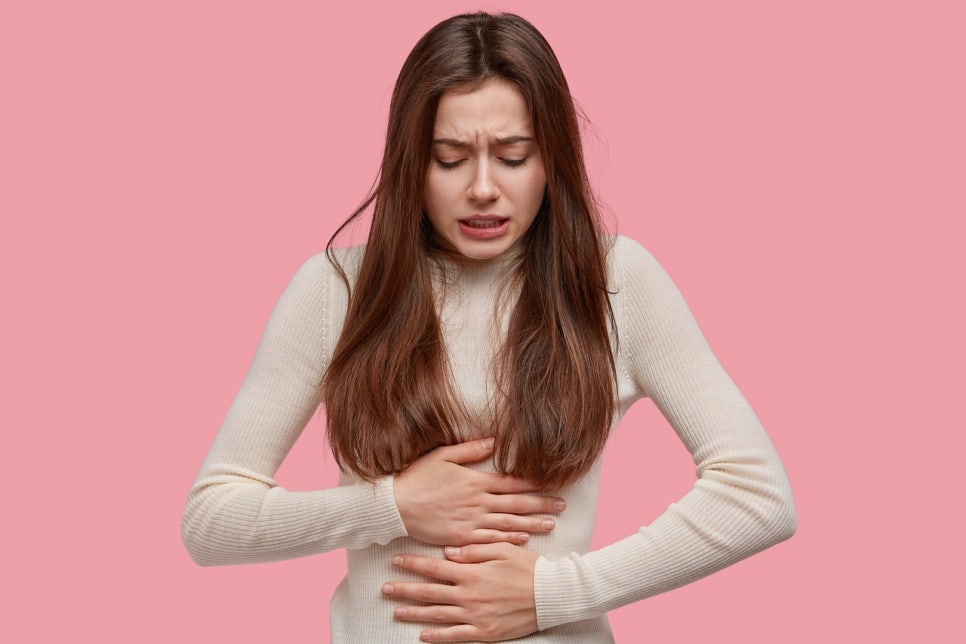
“Back pain due to changes in the lower abdomen is a common phenomenon.”
For example,
- Many people experience a throbbing ache radiating all the way to the lower back when menstrual cramps occur.
- This is not necessarily because there is a major issue with the uterus, but because pain can accompany the back when changes occur across the entire lower abdomen (uterus, large intestine, pelvic lymph, etc.).
In other words,
“The fact that women experience back pain during menstruation,
and the fact that back pain occurs when the intestines or pelvic lymph nodes become sensitive,
are actually not fundamentally different in principle.”
If you ask why the back hurts,
it is surprisingly common that minor changes have occurred behind it in the lower abdomen (intestines, uterus, pelvic blood flow).
“They say my back is fine on examination? → If so, why does it hurt?”
- Even after going to the hospital and taking X-rays and MRIs, they say there is no disc herniation or stenosis.
- Even with physical therapy or painkillers, it does not resolve fundamentally, recurring once every few months.
Then it is easy to leave it unattended thinking, “Is it just chronic muscle pain?”
In such cases, it is advisable to check your digestion and the state of your intestines (large and small).
There are quite a few cases showing patterns such as:
“My back hurts whenever I drink alcohol,”
“My back feels stiff together with it after eating bad food,”
or “When constipation worsens, the back pain suddenly becomes severe.”
“How are the intestines and the back connected?”
In short,
- It is because internal organs (viscera) and the lower back (muscles, nerves) share signals through the same spinal cord nerve segments.
- For example, through a mechanism called the viscerosomatic reflex,
- when a problem arises in the intestines (inflammation, sensitivity, increased abdominal pressure),
- 'pain signals' spread from the spinal cord toward the back, which can cause back pain.
As a similar example, it is easy to understand if you think of how lower abdominal pain spreads to the back during menstruation.
“Does the intestinal problem have to be serious for the back to hurt?”
This does not solely refer to serious diseases like colorectal cancer or lymphoma.
- Even when examinations show no particular abnormal findings, the key point is that mild bowel troubles—such as usually having frequent diarrhea
- or having an unsettled stomach—can also affect the back.
- For some people whose backs hurt continuously despite having no disc issues,
- the pain often drops sharply once the intestinal area is managed (improving digestion, promoting abdominal circulation, etc.).
“What should we do in such cases?”
- Observe the condition of your back and your intestines together
- It is good to keep a record of your everyday stool condition (loose stools, constipation) or the frequency of stomach aches.
- Also check when back pain appears, after eating what, or during which lifestyle habits.
2. Do not look only at the back just because it is back pain
- If there are no structural problems (herniated disc, spinal stenosis) in hospital tests, consider the possibility of digestive system problems.
- In Korean medicine, an approach that alleviates back pain through managing the abdomen (intestines) is frequently used.
3. Women’s ‘back pain during menstruation’ is also a reference case
- If blood flow changes in the uterus, pelvic lymphatics, or intestinal area, it is only natural that the impact reaches the back as well,
- so it is good to understand that similar phenomena can occur after drinking alcohol or after eating spicy food.
“If your back hurts frequently, check your digestive status first.”
- If back pain keeps recurring and there appear to be no muscle or disc issues,
- how about checking “whether your intestines (large and small intestines) might be sensitive,” and “whether your abdomen feels bloated or you have diarrhea and constipation at the same time”?
- More people than one might think experience that back pain also subsides when the lower abdomen (intestines) area is improved.
Thinking “my back hurts = unconditionally the fault of the back” is too simple a formula.
A back that aches when drinking alcohol, back pain that is particularly severe during menstruation, back pain that follows whenever the stomach becomes uncomfortable…
All of these are not unusual or strange symptoms.
Because our bodies are connected as one!
In the end, having lower abdominal problems (uterus, intestines, pelvic lymphatics, etc.) lead to back pain is a fairly common pattern,
so in the future when your back hurts, try thinking of “how my digestion is these days, and whether my stool condition is okay” first.
That small habit can be the first step in finding the root cause of your back pain.