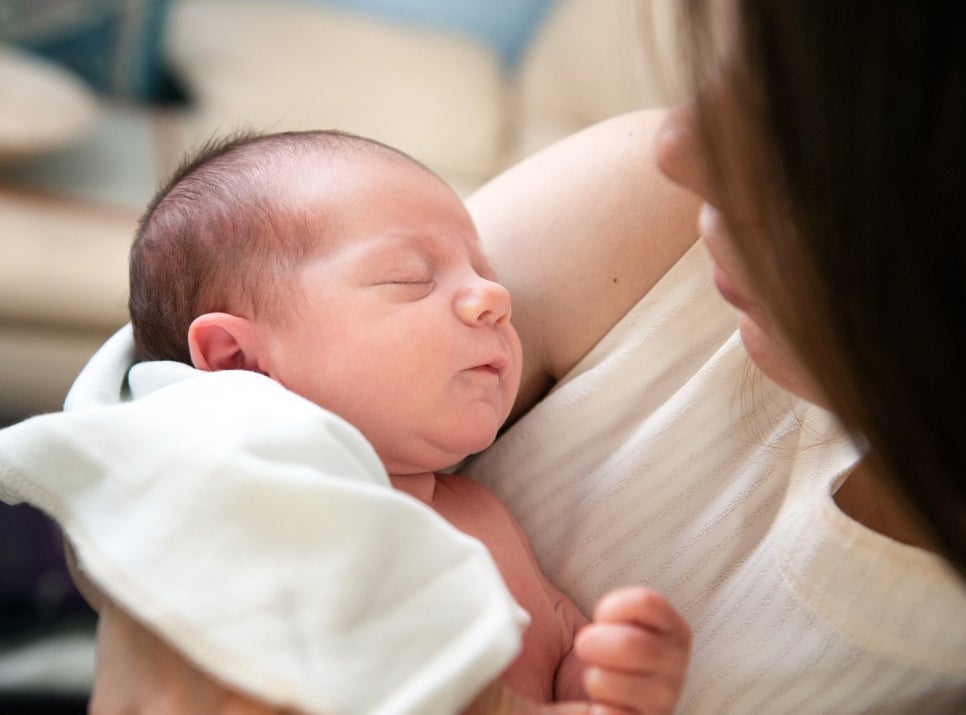
Mother of a 7-month-old baby visits a Korean medicine clinic because her neck won't turn
"After holding my baby for a long time, my neck suddenly won't turn.
My back feels stiff all over, and my wrists ache so much that it's hard even to lift things.
Sometimes my shoulders feel stiff like stones,
and above all, because I'm breastfeeding, I can't freely use painkillers or injections.
I thought, 'Should I just endure it...?' but it became completely unbearable, which brought me to visit the Korean medicine clinic."
This is what a postpartum mother (around 7 months after childbirth) who visits our clinic said.
Those of you raising a child can probably nod in agreement, right?
Because 'parenting' is the greatest blessing in the world, as well as the most grueling labor.
"After childbirth, parts throughout the body are in a 'weakened and widened' state"
Immediately after childbirth, the pelvis and joints are widened and weakened through the childbirth process,
and strain easily accumulates in the process of holding and caring for the baby.
- Wrist pain: Placing strain on the ligaments while supporting the baby's neck and maintaining bottle-feeding or nursing postures
- Shoulder and neck stiffness: A life of constantly moving without rest, bouncing and soothing the baby
- Back pain: Increased burden on the back due to changing diapers in a hunched posture and holding the baby frequently
However, because they are breastfeeding, they cannot freely use either painkillers or anti-inflammatory injections,
so many people leave it untreated, thinking, "Do I just have to bear it no matter what...?"
"At a Korean medicine clinic, you do not need to endure it."
Viewed from the perspective of Korean medicine, postpartum mothers during this period are experiencing:
- A state where ligaments and joints are weakened
- A state where circulation throughout the body is not smooth
- A state where even mental energy is depleted due to stress and lack of sleep
.
- Acupuncture treatment: Quickly alleviates pain by relieving tension in stiff and blocked muscles and ligaments
- Moxibustion and cupping: Aids blood circulation and lymphatic flow, and warmly relaxes cold or congested areas
- Herbal medicine (when necessary): Replenishes qi and blood, and boosts physical strength with prescriptions that support postpartum recovery
- Manual therapy (such as Chuna): Gently corrects a misaligned pelvis or lower back
Around 7 months postpartum, the acute period immediately following childbirth has already passed, but it is a period when pain rather escalates as parenting fatigue accumulates.
Yet, even without injections or strong medications, many feel same-day pain relief through acupuncture and moxibustion, improvement of lymphatic circulation through massage, and more.
Above all, an advantage is that we can suggest safe treatments tailored to the mother's constitution and situation, avoiding concerns like "I'm breastfeeding; could this harm my baby?"
"To make matters worse, as my body hurt, my mind also became heavy."
Spending 24 hours a day glued to the baby, with no time to properly take care of one's own life,
and unable to even say where it hurts all day long... as this continues, postpartum depression can easily set in.
Our Korean medicine approach does not merely treat the body, but aims for 'holistic care' that:
- Looks into parenting stress through conversations with patients,
- Helps them find psychological stability,
- And, when necessary, also considers herbal medicine that puts the mind at ease.
For both child and mother to stay healthy, taking time for the mother to care for herself is an absolute necessity.
When you experience pain being quickly eased through a visit to a Korean medicine clinic,
your heart may also feel lighter, thinking, "Ah, I can actually save up a little bit of energy too."
“Did you endure it out of helplessness because you couldn't use painkillers or injections?”
- Did you firmly bear it, telling yourself you must nurse even though your shoulders are stiff and your wrists ache with coldness?
- Have you just hung in there even when your chest feels stifled because your head is heavy and the lymph nodes around your chest area are congested?
- Or when people around you say, “Parenting is inherently hard!”
- Did you feel frustrated only on the inside, thinking, “Still, it hurts so much, what should I do…?”
Now, come get a checkup at INI Korean Medicine Clinic.
- If it hurts, there must be a reason why it hurts,
- and there are definitely alternatives tailored to it.
- Even if there are medications that are difficult to use because you are breastfeeding, Korean medicine methods are diverse.
Even more recommended for mothers like this!
- “Aches throughout the body here and there, and constantly fatigued.”
- Long-term pain develops as the burden of parenting accumulates while postpartum recovery is incomplete
2. “I want to reduce pain somehow without medications or injections.”
- Those who are breastfeeding, or worried about drug side effects
3. “Postpartum depression is gradually creeping in.”
- If parenting stress and physical pain come together, emotional care is needed
There are more things that can be resolved at a Korean medicine clinic than you might think
- With acupuncture, moxibustion, and cupping, it directly relieves uncomfortable areas and aids blood circulation.
- By reviving vitality with herbal medicine that aids postpartum recovery, fatigue and pain are managed simultaneously.
- With manual (massage) therapy that relaxes the axillary lymph nodes or the fascia around the neck and shoulders, headaches and chest tightness are relieved.
- Through counseling, it helps organize the complex emotions experienced during childcare and find emotional stability.
Of course, since each person's constitution and symptoms are different, we proceed in a customized manner following medical consultation.
“Only when the mother is healthy can the child also be happy.”
At 7 months, it is a period when the baby gradually crawls, rolls over, and moves around more and more.
As that happens, the mother's drain on stamina becomes even greater.
Rather than just enduring, if you listen to your body's voice in a timely manner and care for it,
you can play with your child more enjoyably for a longer time.
If you are having thoughts like, “Is it only me who struggles like this…?”
do not hesitate and please inquire with INI Korean Medicine Clinic.
You can regain a healthy parenting life
that you almost missed due to words from others saying, 'Going to the clinic didn't do much.'
“During this precious time spent with your baby, we will help you hurt less and be happier.”
Learn a Little More
Western Medicine and Korean Medicine Perspectives on Postpartum Joint Pain
After childbirth, there are many people who feel aching coldness, stiffness, and sometimes even swelling in areas such as wrists, lower back, and knees.
Western medicine generally explains these symptoms as being caused by the effects of the relaxin hormone, weight gain, and joint overuse from childcare.
Korean medicine views this as sanhubung (postpartum wind path syndrome) and sees that cold energy (cold) or dampness (damp) can invade during a state of qi and blood deficiency, causing joint pain.
- Western Medicine Perspective: Decreased joint stability, inflammation, ligament damage → Physical therapy, medication, and rest are recommended
- Korean Medicine Perspective: When qi (氣) and blood (血) become deficient, the body is easily exposed to cold and damp energy, leading to pain → Proceeding with both replenishing qi and blood and expelling pathogenic factors (邪氣) through acupuncture, moxibustion, herbal medicine, etc.
Ultimately, from either perspective, it is the same that strain accumulates on the mother's body and worsens the pain.
(The above content is for reference information, and treatment methods may vary depending on actual symptoms and circumstances.)